Future Perfect i Future Perfect Continuous: czasy przyszłe dokonane w angielskim
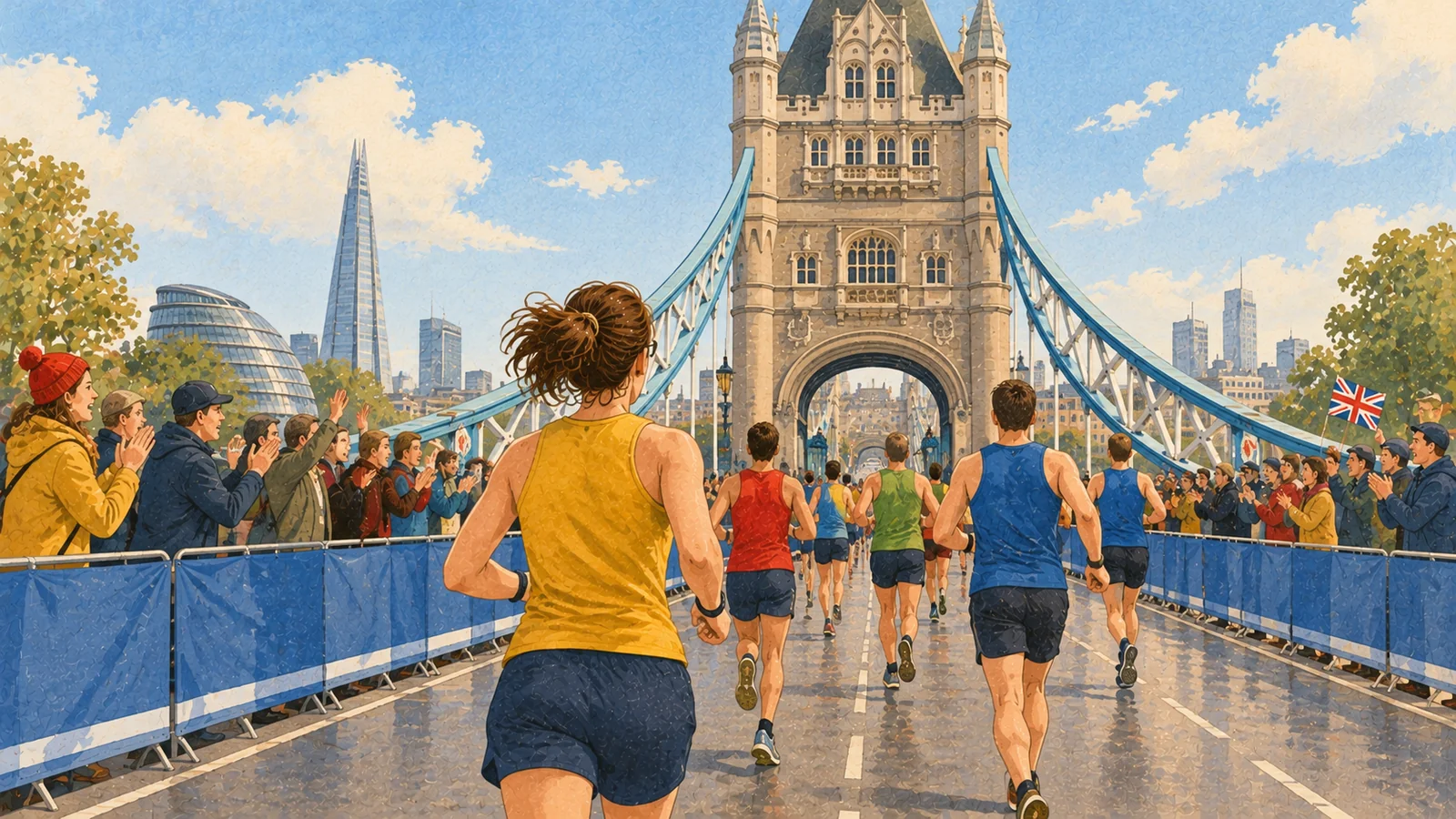
Niedziela, Maraton Londyński, start w Greenwich. W południe najszybsi biegacze będą już po wszystkim: "By noon the winners will have finished." A twoja ciocia, która biegnie pierwszy raz w życiu i przekroczyła linię startu o dziesiątej, o tej samej porze będzie gdzieś w okolicy Tower Bridge: "By noon she'll have been running for two hours." W obu zdaniach stajemy w punkcie przyszłości i patrzymy wstecz – na to, co do tego czasu będzie zrobione albo jak długo będzie trwało. Służą do tego Future Perfect i Future Perfect Continuous. O nich jest ta lekcja.
To szósta lekcja o przyszłości. Oba czasy są przyszłymi odpowiednikami tego, co znasz z lekcji o Past Perfect i Past Perfect Continuous – tylko punkt, od którego patrzymy wstecz, leży nie w przeszłości, lecz w przyszłości. Na końcu jest siedem ćwiczeń ze sprawdzaniem odpowiedzi.
1. Spojrzenie wstecz z przyszłości
Future Perfect w jednym zdaniu
Coś będzie już zrobione przed jakimś momentem w przyszłości. Future Perfect Continuous – coś będzie trwało od jakiegoś czasu aż do tamtego momentu.
| Teraz | Między teraz a tamtym punktem | Punkt w przyszłości |
|---|---|---|
| The race starts at 10 a.m. | the winners run 42 km | By noon they'll have finished. |
| I start my new job today. | I work there every day | By Christmas I'll have been working there for three months. |
Polszczyzna nie ma na to osobnej formy. Mówimy „do południa skończą”, „zdążę”, „będzie już po wszystkim”, „w grudniu minie rok, odkąd…”. Słowo-klucz w angielskim to by: by noon, by Friday, by then, by the time you arrive.
2. Future Perfect: will have + III forma
Ten czas składa się z will, have (zawsze have, nigdy has) i trzeciej formy czasownika. Trzecie formy czasowników nieregularnych są w tabeli czasowników nieregularnych.
Subject + will have + past participle (III forma)
| Zdanie | Forma pełna | Forma skrócona |
|---|---|---|
| Twierdzenie | She will have left by six. | She'll have left by six. |
| Przeczenie | We will not have finished by then. | We won't have finished by then. |
| Pytanie | Will you have read it by Monday? | – |
W mowie will have skraca się mocno, a have traci h: she'll have /ʃiːl əv/. Dlatego w piśmie spotyka się czasem błędne will of – tak jak would of zamiast would have.
By the time you get this letter, I'll have left London.
Kiedy używamy Future Perfect
Najczęściej mówimy, że coś zdąży się skończyć przed jakimś momentem.
- Come at eight. I'll have finished the cooking by then. Przyjdź o ósmej. Do tego czasu skończę gotować.
- By the time we get to the cinema, the adverts will have ended. Zanim dotrzemy do kina, reklamy się skończą.
- Hurry up! The shops will have closed before we get there. Pośpiesz się! Sklepy będą zamknięte, zanim tam dojedziemy.
Z czasownikami stanu (be, know, have, live) Future Perfect mówi też, jak długo coś będzie trwać do jakiegoś momentu – rocznice, jubileusze, staż:
- In May my parents will have been married for forty years. W maju minie czterdzieści lat od ślubu moich rodziców.
I'll have finished the report until Friday.
I'll have finished the report by Friday.
Polskie „do piątku” ma po angielsku dwa odpowiedniki. By Friday = najpóźniej w piątek, w piątek albo wcześniej (termin). Until Friday = aż do piątku, cały czas do piątku (trwanie): I'll be in Leeds until Friday. Future Perfect łączy się z by.
By June she will has passed her exams. They'll have went home by then.
By June she will have passed her exams. They'll have gone home by then.
Po will zawsze have, a po have – trzecia forma (gone, nie went).
3. Future Perfect Continuous: will have been + -ing
Ten czas jest rzadki – w codziennej rozmowie można go nie usłyszeć tygodniami. Przydaje się jednak, gdy chcemy policzyć, jak długo coś będzie trwało aż do jakiegoś momentu w przyszłości. Najczęściej z for.
Subject + will have been + verb-ing
- In September I'll have been teaching for twenty years. We wrześniu minie dwadzieścia lat, odkąd uczę.
- By the time the plane lands, we'll have been travelling for almost a day. Kiedy samolot wyląduje, będziemy w podróży prawie dobę.
- At midnight they'll have been waiting for the results for six hours. O północy minie sześć godzin, odkąd czekają na wyniki.
Jak we wszystkich czasach ciągłych, czasowniki stanu zostają w formie prostej: By June we'll have known each other for ten years (nie: we'll have been knowing).
4. Future Perfect czy Future Perfect Continuous?
To ta sama para co w przeszłości: forma prosta liczy efekt (ile, co gotowe), forma ciągła – trwanie (jak długo).
| Future Perfect – efekt, ile | Future Perfect Continuous – trwanie, jak długo |
|---|---|
| By Friday I'll have written four chapters. | By Friday I'll have been writing this book for a year. |
| By noon she'll have run twenty kilometres. | By noon she'll have been running for two hours. |
Will have + III forma nie zawsze mówi o przyszłości. Brytyjczycy często używają tej konstrukcji do pewnego przypuszczenia o przeszłości – o czymś, co według nas na pewno już się stało:
You'll have heard the news, I suppose.
czyli „pewnie już słyszałeś”. Podobnie: Don't worry, she'll have got home by now (na pewno już dotarła do domu) albo, w oficjalnym mailu, As you will have noticed, the car park is closed (jak zapewne państwo zauważyli…). To ten sam mechanizm co w She'll be watching TV now z lekcji o Future Continuous: will wyraża tu nie przyszłość, lecz pewność mówiącego.
Priya: When's the kitchen going to be ready?
Builder: Well, we'll have taken the old units out by Wednesday, and we'll have fitted the new ones by the end of next week.
Priya: So we can cook by the weekend after?
Builder: I wouldn't promise that. The electrician won't have finished.
Priya: By then we'll have been living on takeaways for a month.
Builder: Look on the bright side – you'll have tried every curry house in Tooting.
Budowlaniec mówi, co będzie gotowe do jakiego terminu (we'll have taken out, we'll have fitted, won't have finished). Priya liczy, jak długo będą jeść na wynos (we'll have been living).
Ćwiczenia
Ćwiczenie 1. Zbuduj formę
Wpisz czasownik w Future Perfect. Formy skrócone i pełne są poprawne.
- By ten o'clock I finish my homework.
- They not / arrive by lunchtime.
- you / read the book by Monday?
- By the end of the year we save enough for a car.
- The film start by the time we get there.
- By 2030 she become a doctor.
- Next month we be married for ten years.
- I not / forget by tomorrow, I promise.
Ćwiczenie 2. By czy until?
Kliknij słówko, które pasuje: termin (by) czy trwanie aż do momentu (until)?
- Please send me the photos by / until Friday.
- I'll be on holiday by / until the twentieth.
- We'll have painted the room by / until the weekend.
- The shop is open by / until 10 p.m.
- I'll have finished by / until the time you wake up.
- Can you wait by / until I come back?
Ćwiczenie 3. Co zdąży się wydarzyć?
Wpisz jeden czasownik w czasie teraźniejszym (po by the time, before), a drugi w Future Perfect.
- By the time you get home, I cook dinner.
- The party finish before we arrive.
- By the time she be thirty, she visit fifty countries.
- By the time the guests come, the children eat half the cake.
Ćwiczenie 4. Efekt czy trwanie?
Kliknij formę, która pasuje do zdania.
- By June I 'll have taken / 'll have been taking all my exams.
- By June I 'll have studied / 'll have been studying English for six years.
- By the end of the day he 'll have answered / 'll have been answering a hundred emails.
- When we get there, we 'll have driven / 'll have been driving for nine hours.
- Next year we 'll have known / 'll have been knowing each other for twenty years.
- By Sunday they 'll have built / 'll have been building the bridge for three years.
Ćwiczenie 5. Policz na przyszłość
Napisz zdanie w Future Perfect albo Future Perfect Continuous. Potem porównaj z odpowiedzią.
- Anna zaczęła pracę w szpitalu w styczniu 2020. Ile lat minie w styczniu 2030? In January 2030 Anna will have been working at the hospital for ten years.
- Tom czyta 20 stron dziennie. Ile przeczyta w ciągu tygodnia? By the end of the week Tom will have read 140 pages.
- Pociąg odjeżdża o 9.00, a przyjeżdża o 15.00. Jak długo będziesz w podróży? By three o'clock I'll have been travelling for six hours.
- Twoi dziadkowie wzięli ślub w 1976 roku. Co powiesz w 2026? This year my grandparents will have been married for fifty years.
Ćwiczenie 6. Znajdź błąd
W każdym zdaniu jest jeden błąd. Popraw go, a potem sprawdź.
- By Friday I will has finished. By Friday I will have finished.
- They'll have went home by midnight. They'll have gone home by midnight.
- I'll have finished the project until Monday. I'll have finished the project by Monday.
- By the time you will arrive, we'll have eaten. By the time you arrive, we'll have eaten.
- In May I'll have been knowing her for a year. In May I'll have known her for a year.
- She will of left by now. She will have left by now. (Albo: She'll have left by now.)
Ćwiczenie 7. Przetłumacz
Przetłumacz na angielski, a potem porównaj z odpowiedzią.
- Do piątku skończę ten raport. I'll have finished this report by Friday.
- Zanim przyjedziesz, goście już wyjdą. By the time you arrive, the guests will have left.
- W czerwcu minie pięć lat, odkąd tu mieszkamy. In June we'll have lived here for five years. (Albo: we'll have been living here for five years.)
- Do końca roku przeczytam dwadzieścia książek. I'll have read twenty books by the end of the year.
- Pewnie już słyszałeś, że Kasia się przeprowadza. You'll have heard that Kasia is moving.
- O ósmej będę się uczyć już od pięciu godzin. By eight o'clock I'll have been studying for five hours.
Najważniejsze z tej lekcji
- Future Perfect: will have + III forma – co będzie gotowe przed momentem w przyszłości.
- Future Perfect Continuous: will have been + -ing – jak długo coś będzie trwać do tego momentu.
- Słowo-klucz: by (by Friday, by then, by the time…); po by the time – czas teraźniejszy.
- by = najpóźniej do (termin), until = aż do (trwanie).
- Forma prosta – efekt, ile; forma ciągła – jak długo.
- You'll have heard… – pewne przypuszczenie o przeszłości.
Te czasy najlepiej ćwiczyć na konkretnych liczbach. „Kalkulator przyszłości”: uczniowie obliczają, ile w swoim życiu zrobią do pewnego wieku (By the time I'm 80, I'll have eaten about 30,000 breakfasts. I'll have been sleeping for over twenty years.) i porównują wyniki. Do by i until pasują krótkie dialogi z terminami: szef i pracownik, nauczyciel i uczeń, klient i budowlaniec (Will it be ready by Monday? – I'm afraid not. I'll be working on it until Wednesday.). Przypuszczenia z You'll have… można przećwiczyć w grze w detektywa: The lights are off. They'll have gone to bed.
Źródła i dalsza lektura
- Paciorek J., Wielka gramatyka języka angielskiego, Wydawnictwo GREG, Kraków 2024.
- EF Polska, Czas Future Perfect po angielsku, ef.pl [dostęp: 13.11.2026].
- EF Polska, Czas Future Perfect Continuous po angielsku, ef.pl [dostęp: 13.11.2026].
- British Council, LearnEnglish, Future continuous and future perfect (B1–B2 grammar), learnenglish.britishcouncil.org [dostęp: 13.11.2026].
- Swan M., Practical English Usage, wyd. 4, Oxford University Press, Oxford 2016 – hasła o Future Perfect i Future Perfect Continuous, o by i until oraz o will w przypuszczeniach.
- Murphy R., English Grammar in Use, wyd. 5, Cambridge University Press, Cambridge 2019 – rozdziały o will have done oraz o by i until.
Pobierz artykuł jako PDF format A4, gotowy do druku
Komentarze
Komentarze pochodzą z Bluesky. Odpowiedz na mój wpis o tym artykule, a Twój komentarz pojawi się tutaj.
Skomentuj na Bluesky